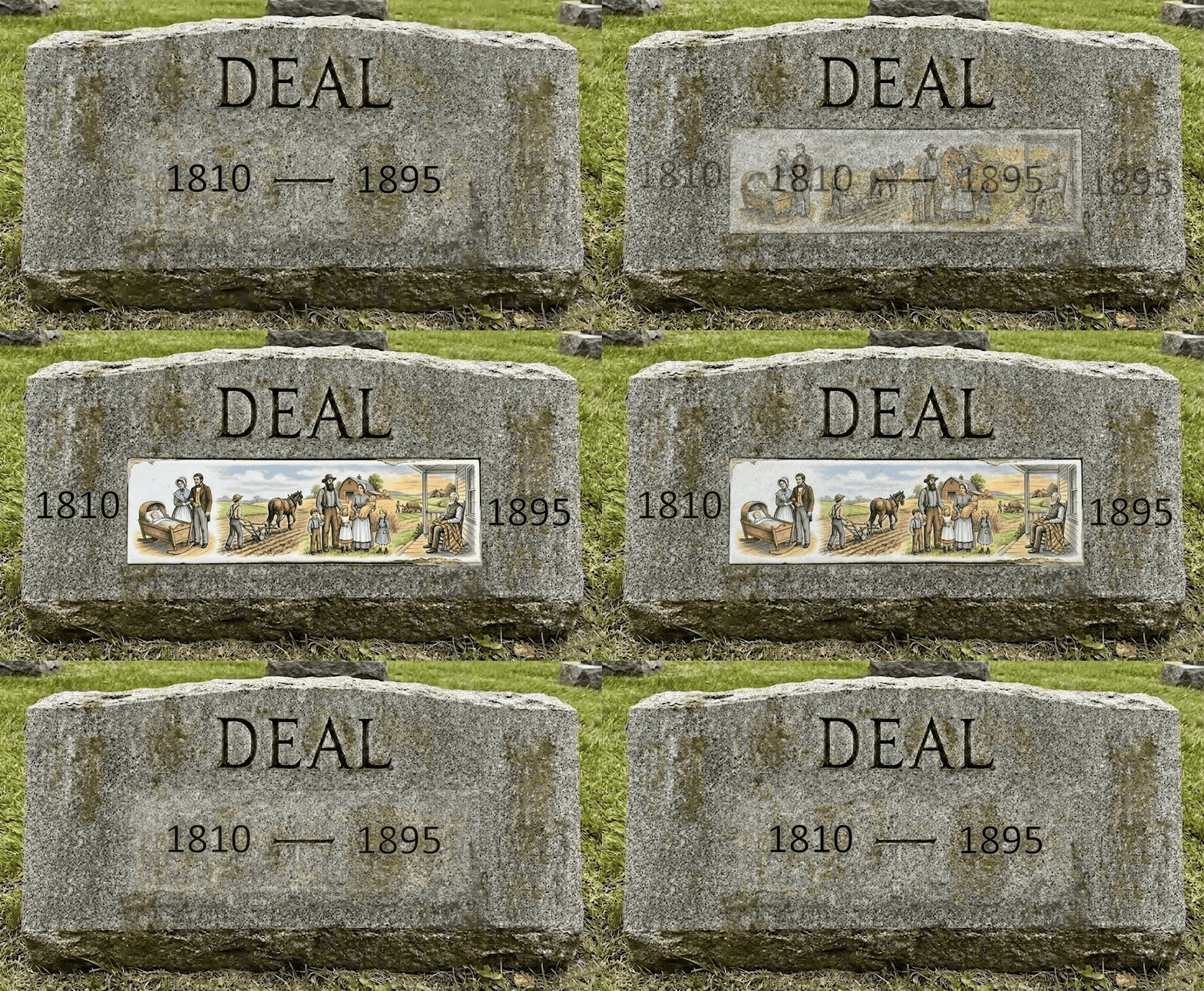
As we wander through any cemetery, we’ll find most headstones engraved with a name and a birth date and a death date. If we’re lucky, we’ll find some markers with additional information, sentiments, quotes or verses of scripture. But how do you capture a life on a tombstone? Nearly all grave markers will have a small, engraved dash between the birth date and the death date. As we research the lives of our family and ancestors, we come to realize that the dash is what we’re most interested in. The dash holds everything. First breaths, first love, family life, and final goodbyes. And so much more. These are the ordinary days and defining moments of a mortal life. The dates may mark when a life began and ended, but the dash tells the real story; how someone chose to live in between. What stories will you find when you discover the dash?
The story of Algernon Horatio Skingle Higbee is one of profound resilience shadowed by a haunting family pattern of tragedy. Born into a working-class family in London and orphaned before he could walk, Algernon’s life was a testament to the grit required to survive the 19th century and the cloud of heartbreak and despair that hung heavy over many lives In Victorian London.
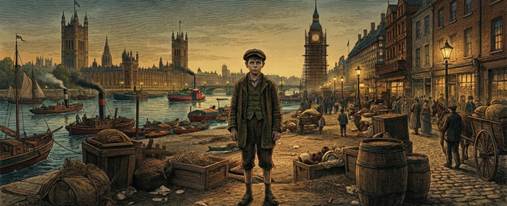
Algernon was born on June 8, 1858, at 65 King Street, Stepney. At that time, Stepney was a rapidly growing, densely populated, and impoverished district in East London. 1858 was also the infamous summer of “The Great Stink;” the Thames smelled so bad that Parliament actually had to shut their windows and finally get serious about fixing the city’s sewers and addressing the deadly cholera outbreaks. This was the world into which Algernon was born. And while London was busy dealing with its own problems, the Higbee family was about to face a much more personal series of heartbreaks.
Just two weeks after Algernon’s birth, his mother, Eliza James, died of puerperal mania. In the mid-19th century, puerperal mania (what we now recognize as a severe form of postpartum psychosis) was a terrifying and poorly understood diagnosis. In the smog-choked streets of 1850s London, medical science had no concept of hormonal shifts; instead, doctors often blamed the condition on “shattered nerves,” “moral shock,” or the sheer exhaustion of labor. For a young mother like Eliza, the sudden descent into a violent, confused state was often treated with little more than heavy sedation or confinement in a bleak infirmary. In an era before modern psychiatry, this “mania” frequently proved fatal, turning the celebration of a new life into a frantic and unrecognizable tragedy for the family left behind. It is hard to image what Eliza may have endured before her death.
Death Certificate of Eliza James Higbee 1858
Heartbroken and “unsettled” by the death of his wife, Algernon’s father, Horatio Higbee, a 22-year-old tobacconist, butcher and artist, sank into a “low and melancholy mood”. On December 18, 1858, when Algernon was just six months old, his father committed suicide by swallowing a quantity of prussic acid (cyanide) used in photography. He was found in his room by his mother, Jane Kirby Higbee, who noted he had become “disturbed in his mind” following his wife’s death.
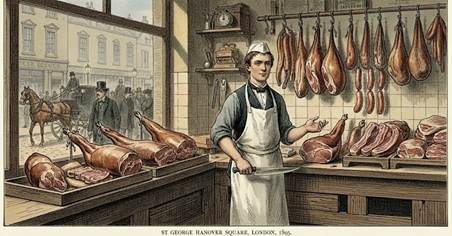
These tragic deaths left a 6-month-old Algernon an orphan. How it was decided who might raise him is left to speculation, but he was raised for a time by a step-aunt and her family, the Robinsons, in Spitalfields, London. The Robinsons were a family of pork butchers, so Algernon traded his father’s artistic aspirations for a blade and an apron. He grew up in the trade, learning the grueling, disciplined life of a butcher in London.
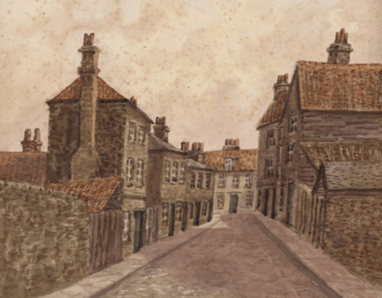
Despite such a chaotic start to life, Algernon seemed to have found a profession and an opportunity for a good life. Sometime around 1878, Algernon met and married Katherine (possibly Hammond) and began a life together as husband and wife in the quaintly named “Artichoke Alley” in Richmond, London.
Artichoke Alley, Richmond, painting from 1906
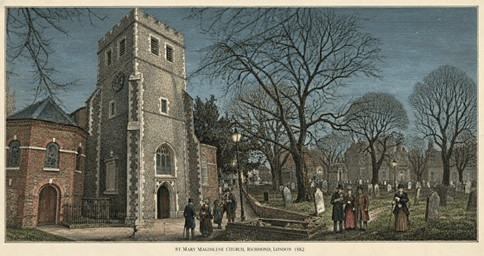
Algernon and Katherine soon welcomed a son, Hurbert, into the world. The 1881 census for Richmond lists Algernon, Katherine and Hurbert living at #4 Artichoke Alley. Perhaps this was a time of joy for the young family. This joy, however, was short-lived as tragedy again struck the Higbee family, when Katherine suddenly died just a year later in 1882 at 26 years of age from an apparent heart attack. Algernon was 24 and little Hurbert was 4. Katherine is buried just around the corner from their home, in the St Mary Magdalene Church cemetery in Richmond.
Death Certificate of Katherine Higbee 1882
Faced with the same painful void his father had encountered decades earlier, Algernon somehow chose to push forward. The fate of their young son, Hurbert, however, remains unknown, as he is simply lost to time. There are no records beyond his mention in the 1881 census record. One day, perhaps, we might find a reference to young Hurbert and a clue to his upbringing and fate. What life was like for Algernon at this time is only a guess. But a few years later, in 1886, Algernon met and married Rose Ann Froud and professionally transitioned from the butcher’s block to the steam and bustle of the London coffee trade.
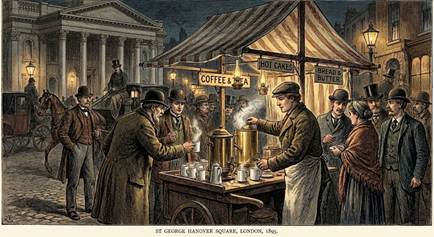
By 1895, Algernon was 37 years old and living at 33 Graham Street in Pimlico. He operated a coffee stall, a job that required him to be up in the predawn hours to serve the laborers and commuters of Westminster. However, records indicate that his health was failing, and the business he had worked so hard to build and maintain began to slip through his fingers.
To help make ends meet and assist with the heavy labor of the stall, the Higbees took in a lodger: James Silver, a young barber and an “old acquaintance” of Algernon. The living situation, as later noted in a news article about Algernon, was “extraordinary.” The Higbees lived in a cramped ground-floor room, and the only way for Silver to reach his own sleeping quarters was to walk through the bedroom where Algernon and Rose Ann slept.
The tension in the household was palpable. Algernon grew increasingly despondent, his mind “unsettled” by illness and the loss of his employment. On the night of Sunday, August 18, the air in the small room on Graham Street was thick with more than just the summer heat.
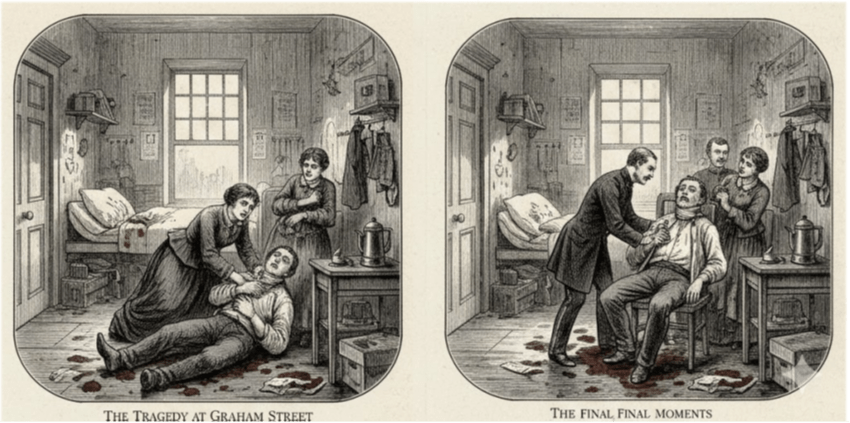
In the early Monday morning hours, the silence of the house was broken by the sound of a heavy fall. Rose Ann, who had been resting in an armchair because Algernon’s restlessness wouldn’t allow her to sleep in the bed, found her husband on the floor. In a desperate act mirroring the “temporary insanity” attributed to his father, Algernon had used a small table knife to cut his own throat.
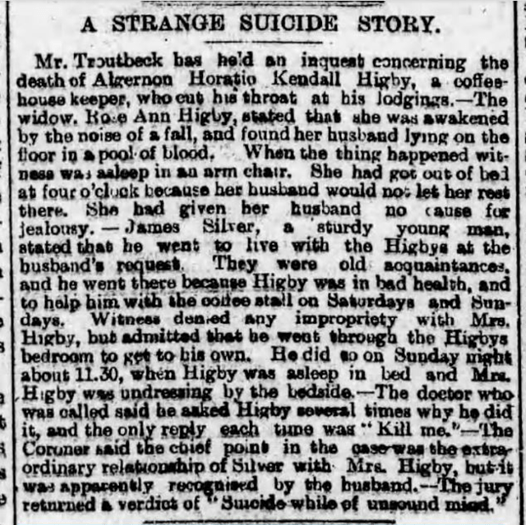
The news articles from the Westminster & Pimlico News painted a harrowing scene. Despite his horrific injuries, Algernon remained conscious for a short time. When the barber, Silver, arrived with a doctor, Algernon could only whisper a haunting plea: “Kill me.” He passed away twenty minutes later.
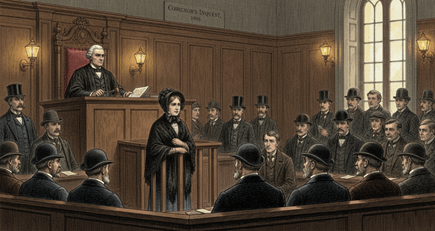
The subsequent Coroner’s inquest was a sensation of local gossip. The jury grilled Rose Ann and James Silver about the nature of their relationship, suspicious of the lodger’s presence in their bedroom. Yet the evidence pointed toward a man broken by the same “melancholy mood” that had claimed his father in 1858.
1895 Coroner’s Inquest
The jury ultimately returned a verdict of “Suicide while of unsound mind.” Algernon Horatio Skingle Higbee was a man who spent his life running from the shadows of his parents’ tragic ends, only to find those same shadows waiting for him. His story remains a heart-rending tale of the Victorian working class; a cycle of hard work, deep loss, and a family tragedy that proved too heavy to outrun.
Article detailing Algernon’s Death
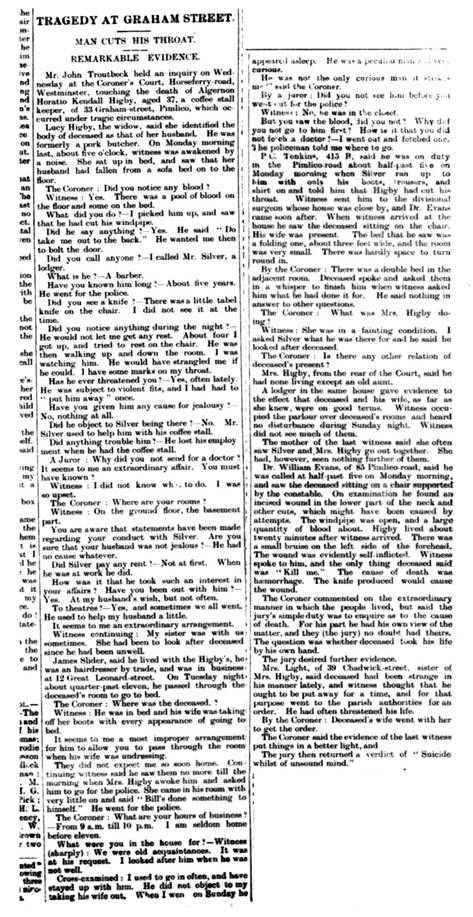
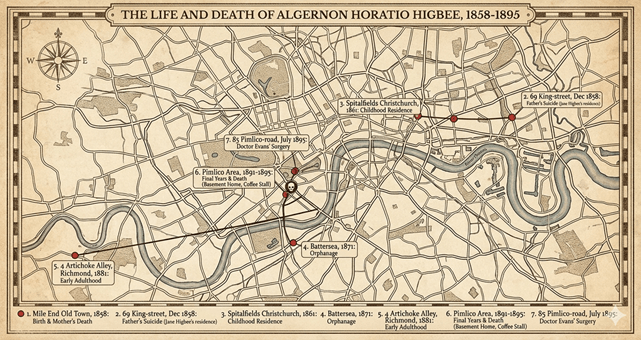
Article Detailing Algernon’s DeathMap of Algernon’s Life Events
SOURCES:
HIGBEE Algernon Horatio Skingle Birth Certificate 8 June 1858 son of Horatio Higbee.JPG
HIGBEE Eliza James Higbee Death Certificate 22 June 1858 wife of Horatio Higbee.JPG
HIGBEE Horatio London England Morning Chronicle 24 Dec 1858 Suicide Story from findmypast
HIGBEE Algernon Horatio Skingle 1861 Spitalfields Whitechapel London England census 2 years old living with half aunt uncle Robinson HIGBEE HIGBY.jpg
HIGBEE Algernon Horatio Skingle 1871 Battersea Surrey England census Orphan with Robinson family noted as Skendle Higby
HIGBEE Algernon Horatio Skingle 1881 Richmond Surrey England census noted as Halgon Higbee wife Catherine son Hurbert
HIGBEE Watercolor of Artichoke Alley in Richmond by F Viner 1906 Artichoke Alley noted as Algernon Higbee home in 1881 census.jpg
HIGBEE Katherine Death Certificate 10 Apr 1882 Richmond Surrey England wife of Algernon.JPG
HIGBEE Algernon living at Brewers Place in 1891 census near Victoria Station 1895 map metadata.JPG
HIGBEE Algernon H S Marriage Record to Rose Ann Frond or Froud St Mary Lambeth London England
HIGBEE Algernon H S Marriage Record to Rose Ann Frond 28 Nov 1886 St Mary Lambeth London England
HIGBEE Algernon Horatio London England Electoral Registers 1891
HIGBEE Algernon Horatio London England Electoral Registers 1893
HIGBEE Algernon Horatio London England Electoral Registers 1894
HIGBEE Algernon Horatio suicide article 22 Aug 1895 Rose Ann Higby wife.JPG
HIGBEE Algernon Horatio Skingle Death article Westminster Pimlico News 23 August 1895 page 5p.jpg
HIGBEE Algernon H K Death Index 1895 Saint George Hanover London England
HIGBEE Algernon Horatio Skingle Death Certificate 19 Aug 1895 noted as Kendall from GRO
William Veach of Delaware was my 6th great grandfather. According to the Veach Historical Society historical volumes, “William “Old Man” Veach was born about 1715 and was an “old man” in 1780 when he was charged with treason, which charge was dropped. An old man he was considered in that generation of Veaches, so short-lived were they, even though he was probably not over sixty-five years of age. He was well-to-do, as is shown by his assessment of 1785, when his taxes were the second highest of the Veaches in Cedar Creek Hundred. He owned more land than any of them; his holdings adding up to 560 acres. After the war was over, we hope that his last days were peaceful. He died between the years 1785 and 1790”.
I too hope that his final years in the newly formed United States of America were joyful and appreciative of the freedoms won through the many sacrifices made during that great Revolution. One could surmise that he might have seen the folly in backing the King and eventually felt some remorse for his traitorous decisions. On the other hand, he barely lived long enough to see the nation win its independence, let alone feel the freedom it eventually wrought. Perhaps he died never understanding the great cause of the American Revolution.
Below is William’s brief story connected to the Black Camp Rebellion of 1780 in Sussex County, Delaware. Let’s call it a little history with a hint of historical fiction.
The Price of Rebellion: William Veach and the Black Camp
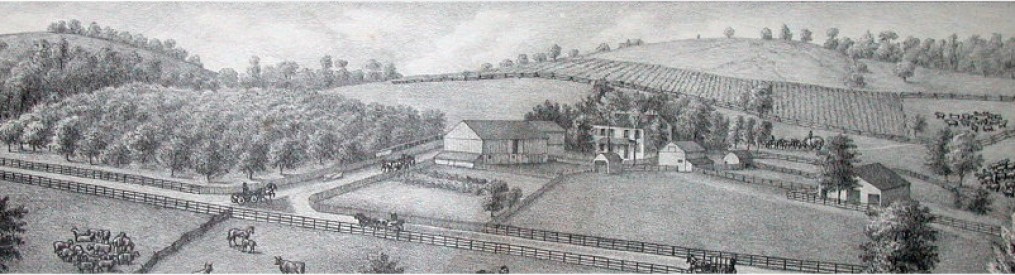
The humid air of the Sussex County cypress swamps was thick enough to chew. William Veach stood on the edge of his acreage, his boots sinking into the dark, loamy soil that had been his life’s work. In 1780, the world was on fire, but in Delaware, the heat was personal.
For William, the “Revolution” didn’t feel like liberty; it felt like taxes and drafts. The newly formed Delaware state government was demanding men for the Continental Army and “Continental dollars” that were becoming as worthless as fallen leaves. To a farmer like William, whose loyalty was rooted in the land rather than a flag, the demand to fight for a cause that drained his barns was a bridge too far. Add to this, a summer drought that destroyed any hopes of a decent harvest, and you found farmers on the brink.
Word traveled through the pines in whispers. “Meet at the Black Camp.” William joined nearly 400 others; neighbors, kin, and fellow Loyalists who retreated into the dense thickets known as the Nanticoke Swamp. They weren’t an army; they were a collective of the frustrated. They hoisted a makeshift flag for King George III, not necessarily out of deep love for a monarch across the sea, but as a defiant protest of the local authorities who had started seizing property from those who wouldn’t pay the war tax. Around July 15 these men came together to discuss their own hardships and their frustrations over the war. They debated what they might do to remedy their situation. They discussed the recent British capture of Charleston and many suggested that most of the southern colonies from Maryland to Georgia were about to be secured by the British. Perhaps securing Sussex County for the British, as well, might earn them favor by the British.
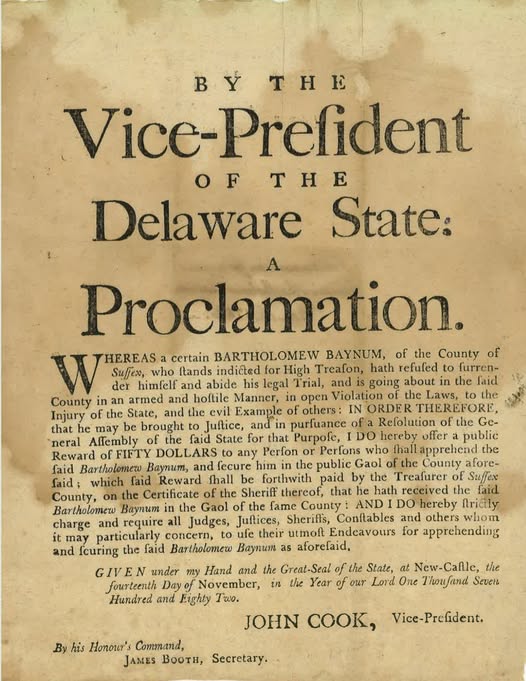
At Black Camp, the air smelled of woodsmoke and desperation. William spent his nights around small fires, listening to the rhetoric of men like Bartholomew Baynum of Broadkill Hundred and William Dutton of Cedar Creek Hundred. They planned to resist the draft and protect their farms. For a few weeks, William felt the surge of a different kind of independence, a freedom from the “Patriot” officials he perhaps viewed as usurpers.
This rebellion, however, was short-lived. The state of Delaware, terrified of a Tory uprising in its own backyard, dispatched the Light Horse troop and a militia led by General John Dagworthy in August 1780.
The “Insurgents,” as the papers called them, were no match for organized cavalry. When the hoofbeats thundered through the brush, the Black Camp dissolved in the blink of an eye. William didn’t go out in a blaze of glory; he went back to his farm, hoping the shadows of the swamp would follow him home and keep him hidden. They didn’t.
By the time the court sat at Lewes, the fervor had turned to cold reality. William Veach and more than 200 more were hauled before the bench, charged with treason. The trial was a sobering affair. In the eyes of the new Republic, the refusal to pay taxes and these participants’ presence at the camp were acts of war against the state. 37 of the leaders were sentenced to death, to be “hanged, drawn, and quartered”. For William and many of the others, fines were imposed that perhaps were intended to be a slow, financial death. William’s fine was £2000, a sum that weighed more than any harvest his land could produce in a year. But at least he was not sentenced to death. For those 37 who were, good fortune came their way. Due to the fact that no one was killed in this rebellion, the state opted not to carry out these executions.
William and his co-defendants (many of his family, friends and neighbors) walked out of the courthouse “traitors” to some and “loyalists” to others, but mostly, they were just farmers who had tried to hold onto their world while the ground shifted beneath their feet.
William Veach returned to his fields, the weight of the fine a constant reminder that in a revolution, the cost of picking the losing side is paid in more than just blood, it’s paid in the very dirt you stand on. However, in November 1780, perhaps in an effort at reconciliation among the communities involved in the rebellion, the Delaware General Assembly issued pardons to all involved, William included.
The Black Camp Rebellion of 1780 is an often-overlooked chapter of the American Revolution. It wasn’t a battle of grand ideals fought by men in powdered wigs; it was a swamp-mired insurrection of farmers who felt squeezed between a King they had always known and a new government they didn’t yet trust.
Below is the wanted poster for Bartholomew Baynum from Delaware’s state archives:


 Discover the Dash