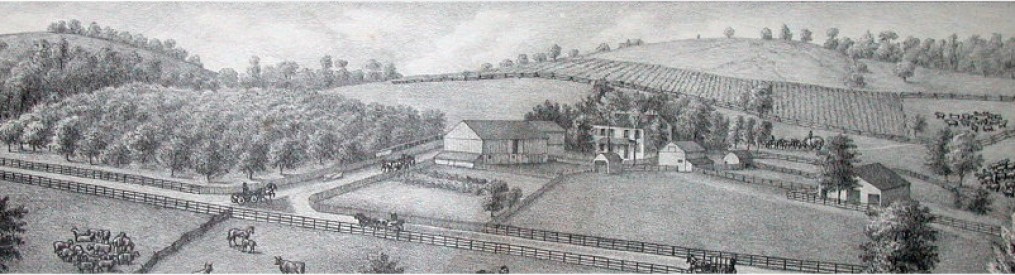
William Veach of Delaware was my 6th great grandfather. According to the Veach Historical Society historical volumes, “William “Old Man” Veach was born about 1715 and was an “old man” in 1780 when he was charged with treason, which charge was dropped. An old man he was considered in that generation of Veaches, so short-lived were they, even though he was probably not over sixty-five years of age. He was well-to-do, as is shown by his assessment of 1785, when his taxes were the second highest of the Veaches in Cedar Creek Hundred. He owned more land than any of them; his holdings adding up to 560 acres. After the war was over, we hope that his last days were peaceful. He died between the years 1785 and 1790”.
I too hope that his final years in the newly formed United States of America were joyful and appreciative of the freedoms won through the many sacrifices made during that great Revolution. One could surmise that he might have seen the folly in backing the King and eventually felt some remorse for his traitorous decisions. On the other hand, he barely lived long enough to see the nation win its independence, let alone feel the freedom it eventually wrought. Perhaps he died never understanding the great cause of the American Revolution.
Below is William’s brief story connected to the Black Camp Rebellion of 1780 in Sussex County, Delaware. Let’s call it a little history with a hint of historical fiction.
The Price of Rebellion: William Veach and the Black Camp
The humid air of the Sussex County cypress swamps was thick enough to chew. William Veach stood on the edge of his acreage, his boots sinking into the dark, loamy soil that had been his life’s work. In 1780, the world was on fire, but in Delaware, the heat was personal.
For William, the “Revolution” didn’t feel like liberty; it felt like taxes and drafts. The newly formed Delaware state government was demanding men for the Continental Army and “Continental dollars” that were becoming as worthless as fallen leaves. To a farmer like William, whose loyalty was rooted in the land rather than a flag, the demand to fight for a cause that drained his barns was a bridge too far. Add to this, a summer drought that destroyed any hopes of a decent harvest, and you found farmers on the brink.
Word traveled through the pines in whispers. “Meet at the Black Camp.” William joined nearly 400 others; neighbors, kin, and fellow Loyalists who retreated into the dense thickets known as the Nanticoke Swamp. They weren’t an army; they were a collective of the frustrated. They hoisted a makeshift flag for King George III, not necessarily out of deep love for a monarch across the sea, but as a defiant protest of the local authorities who had started seizing property from those who wouldn’t pay the war tax. Around July 15 these men came together to discuss their own hardships and their frustrations over the war. They debated what they might do to remedy their situation. They discussed the recent British capture of Charleston and many suggested that most of the southern colonies from Maryland to Georgia were about to be secured by the British. Perhaps securing Sussex County for the British, as well, might earn them favor by the British.
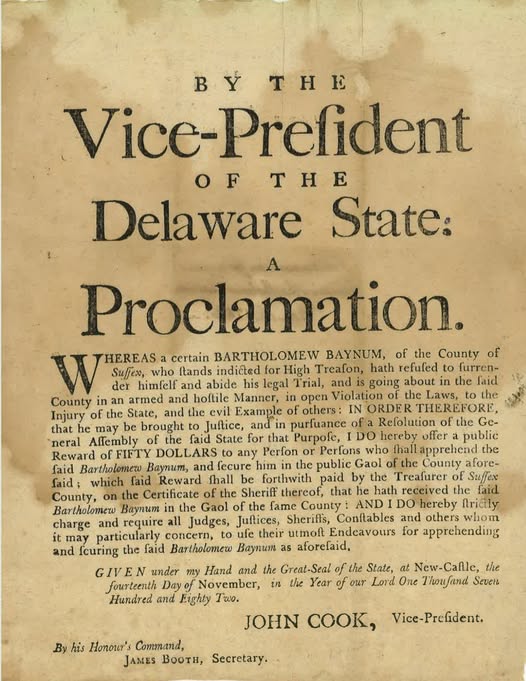
At Black Camp, the air smelled of woodsmoke and desperation. William spent his nights around small fires, listening to the rhetoric of men like Bartholomew Baynum of Broadkill Hundred and William Dutton of Cedar Creek Hundred. They planned to resist the draft and protect their farms. For a few weeks, William felt the surge of a different kind of independence, a freedom from the “Patriot” officials he perhaps viewed as usurpers.
This rebellion, however, was short-lived. The state of Delaware, terrified of a Tory uprising in its own backyard, dispatched the Light Horse troop and a militia led by General John Dagworthy in August 1780.
The “Insurgents,” as the papers called them, were no match for organized cavalry. When the hoofbeats thundered through the brush, the Black Camp dissolved in the blink of an eye. William didn’t go out in a blaze of glory; he went back to his farm, hoping the shadows of the swamp would follow him home and keep him hidden. They didn’t.
By the time the court sat at Lewes, the fervor had turned to cold reality. William Veach and more than 200 more were hauled before the bench, charged with treason. The trial was a sobering affair. In the eyes of the new Republic, the refusal to pay taxes and these participants’ presence at the camp were acts of war against the state. 37 of the leaders were sentenced to death, to be “hanged, drawn, and quartered”. For William and many of the others, fines were imposed that perhaps were intended to be a slow, financial death. William’s fine was £2000, a sum that weighed more than any harvest his land could produce in a year. But at least he was not sentenced to death. For those 37 who were, good fortune came their way. Due to the fact that no one was killed in this rebellion, the state opted not to carry out these executions.
William and his co-defendants (many of his family, friends and neighbors) walked out of the courthouse “traitors” to some and “loyalists” to others, but mostly, they were just farmers who had tried to hold onto their world while the ground shifted beneath their feet.
William Veach returned to his fields, the weight of the fine a constant reminder that in a revolution, the cost of picking the losing side is paid in more than just blood, it’s paid in the very dirt you stand on. However, in November 1780, perhaps in an effort at reconciliation among the communities involved in the rebellion, the Delaware General Assembly issued pardons to all involved, William included.
The Black Camp Rebellion of 1780 is an often-overlooked chapter of the American Revolution. It wasn’t a battle of grand ideals fought by men in powdered wigs; it was a swamp-mired insurrection of farmers who felt squeezed between a King they had always known and a new government they didn’t yet trust.
Below is the wanted poster for Bartholomew Baynum from Delaware’s state archives:
 Discover the Dash
Not a geographic area familiar to me, so I appreciate the background on this aspect of American history!
Very interesting read. Thank you.