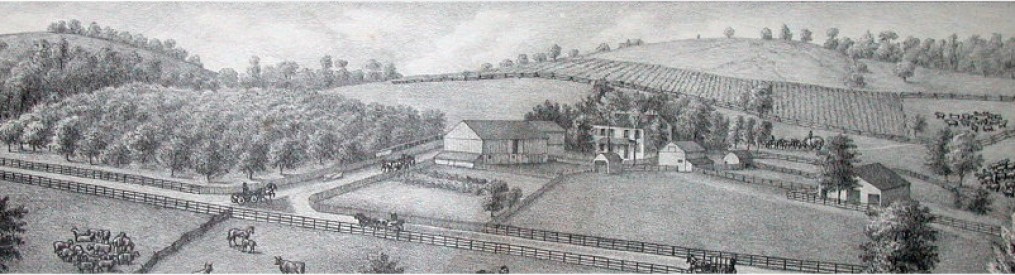
A letter by Almon Bates, from Lincoln, Nebraska, 26 Dec 1964, to a fellow soldier and friend, my great uncle, Nick “Odie” Odekirk. This is very much worth the read.

Dear Odie,
Nothing in all the world could have warmed my heart more this Christmas than to hear the sound of your voice on the telephone, Odie. My brother called me from Hygiene, and told me that Odekirk had called, and when the operator rang your number, I recognized your voice right off. Odie, I was afraid I would never get track of you after I didn’t hear after writing that card. Thought you might be somewhere else, or already answered last roll call.
Like I said, when I went back to Fort Bliss for the first time three years ago this coming March, stayed overnight in El Paso, and took a taxi out to the post at daybreak. I went in the Headquarters Troop barracks, looked around a little, got a drink from the same old drinking fountain and found the water as cold and sweet as ever. Then I walked down to the stables. The stables, stable shack, and blacksmith shop are still intact, but the corral, picket line, and water trough are gone. The corral area is enclosed in a chain link fence with army vehicles and material and equipment parked there. The little Chinese elm on the stable shack lawn had grown considerably, but the grass was thin and gone in spots. A stone had fallen out of the wall around the back of the shack. It really wasn’t too bad, but of course, the present occupants do not give the old stables area the loving care that we did.
One thing that seemed so strange was the silence there—the quietness. There used to be the hustle and bustle of morning chores at that hour. Now there was only stillness. I thought of the old gang—and the horses—wondered where they all might be—and who was still left. And, Odie, I was terribly homesick for a minute. Nostalgia gripped me—there was no one there that understood. A few soldiers in a strange uniform walked nonchalantly by, but they were of a different kind, a different breed—I resented them—they didn’t belong here. They were intruders. But then the first rays of the morning sun fell on the wooden beams that still protrude over the hay loft doors, and at the same time the fresh morning air stirred just a bit, and the fragrance of the desert, the sage, the yucca, and greasewood aroma drifted in just like it used to when we were all- young and there together. And so it was, the sun and the morning air and the purple Franklin Mountains in the distance, the old familiar buildings, the water tower, the barracks, the streets and walks that seemed to greet me, and I knew that the spirit of the cavalry still lived on there, and as I stood there, whispered, “Welcome home, trooper!”
And I stood in front of the old shop, gazing out across the corral toward the stable shack—and I fell to daydreaming—remembering—listening. Ah! The measured tread of marching men—the mounted platoon coming down from the troop for horse exercise. The voice of Sergeant Mace, “Platoon, HALT!” A sudden cease of footfalls. “Riiight FACE!” There is the scrape of leather boots soles on gravel, and then a metallic “click” as spur clad heels are slammed together. “Orderrr ARMS!” The slap rattle and thump of rifles—-
At the water trough is Stable Sergeant Inar F. (Swede) Larsen in neatly pressed O. D. shirt and breeches, campaign hat, highly polished brown boots, and gleaming spurs. In the next-door shop, the Machine Gun Troop shoers already have the forge going, and one can smell the coal smoke—-and there follows the musical “ding, ding, ding” of the fitting hammer on the great anvil.
There is a squeak of the steel gate to the alley between the stables of Hdqs Troop of the 7th, and the corral of C Troop, 8th Cavalry, as Stable orderly Moore swings the gate wide. Then, suddenly, simultaneously, there is a ”clop-clop-clop-clopping” of shod hoofs. the jingling of trace chains, and the rattle and rumble of iron tired wagon wheels on hard packed “caleche,” and in memory I could see the four line team of blacks, the high wheeled olive drab wagon, the morning’s load of stable cleaning piled high starting for the manure dump. Up on the spring seat dressed in baggy shapeless blue denims and droopy “sad Sack” fatigue hats are the Teamster, Odekirk, and Assistant Stable Orderly, Jose (Pancho) Quesada. The wagons always passed by the open door of the horse shoer’s shop.
Odie, I tried to remember the names of the four black “wagon” horses, but could only recall three of them. And then I thought I’d better try to write to you, as I knew your name was listed in the 1st Cavalry Division book. I think they were Blackie and Leo, the wheel team, and Midnight and Moon, the leaders. Do you remember the little sorrel horse I rode? His name was Juarez. He was from the Tate Ranch in Sheridan, Wyoming. I also rode a big tall off-colored brown horse for a while after I first came to the troop before we got in that little bunch of remounts that Juarez was in. The big horse was “Friar Tuck.” When I first came to the troop there were two of four original color bearers mounts. They were Silver and Speck. I rode Silver almost all the way through basic but rode Speck once or twice. Silver was an old horse, but real nice to ride. He had slick hair and was easy to groom, but Speck was hard to get clean. Old Friar Tuck was about the stoutest horse I ever rode in my whole life. I took him out one morning when I was in basic. Swede Larsen said- he had been bucking his riders off out in the desert and running back to the stables. He was a straight away bucker, but caught me on the downhill coming off a big old “bondock”. I had been doing a 1ittle contest riding the summer before and managed to stay above him. Later on, Swede had me ride a no-good little bay named Tennessee. He unloaded lieutenant Barton on the hard caleche in the troop corral by the gate next to the stable shack one morning. He would pull back, fall down, buck, shy, everything. A plumb no good, but Swede recommended me for PFC because I came down and rode him Sundays and off duty time, so got my first stripe that way. Other horses I can remember were Brownie, Blaze, Ole, Joe, Chief, Sergeant, Shotgun (Swede’s horse), Friday, Joe, and a brown or chestnut mare named Dolly, or Molly. She was the only mare in the troop, that is, among the public horses. I think she was the one that Swede once said was, “A good hose to ride, but had a wuff twot.” Swede was actually a Dane. He had soldiered in both the Danish and Swedish Armies. His mother lived in the old country in Copenhagen, Denmark. She always wrote to him. He was a real gentleman, always kind and gracious. Odie, you and Swede were the two at the stables I owe the most to. You were both mature men then, and I was just a punk kid that didn’t half know what the score was, and you two, especially you, Odie , helped me a lot by your good sound advice and council. We were like a family, for we shared with one another life’s joys and sorrows.
Odie, I remember you advised me to send $10 a month by allotment to my aunt who came to live with Dad and took care of my mother. You also urged me one bright Sunday morning to go down and call Mom long distance on Mother’s Day. I’m sure glad I did that–Thanks to you, Odie, because she passed away that September when we were in Australia. Odie, you were my best friend during our days there at the stables. You were my kind of folks—talked my language—knew what made me tick. I sure did laugh to remember how you and Pancho tied hard knots in my Levi pants legs. I never did get those knots undone. Odie, I was down in the because “The Girl I Left Behind Me” had thrown me over for some 4F, or draft dodger, and you fellows were trying to snap me out of it. I remember how you told me to forget her, she wasn’t worth worrying about. and you made the prophesy that I would someday find someone many times better, and honest and true, and I would be glad—which literally came to pass. I have.
Remember old Doc, the Mexican saddler? He was a good guy when sober, but had kind of an ornery streak when he was drinking. Once when he was acting stable orderly, he tried to breed Mrs. Hughes’ sorrel mare to Captain Hughes’ old black stud. Old Pete Marcell was Stable Sergeant then, but he was gone. I was there, but was down in the blacksmith shop. It was on a Sunday, and Doc had been drinking. He was always quarrelsome then, and wanted to fight. Mrs. Hughes jumped me about it the next day. I don’t know how she found it out. Maybe some officer was at Machine Gun Troop stable, or C Troop of the 8th.I heard the horses squealing and raising h–l, so ran out of the shop over to the box stalls, and tried to talk Doc out of it, but he wouldn’t, so I told him if he didn’t quit it, I’d report him. It made him awfully mad, and he wanted to fight me. He was real quarrelsome and disagreeable for a long time afterward. Mrs. Hughes was a real fine lady, and so was her husband. He was troop commander. I think you were there then, Odie. Mrs. Hughes used to help me shoe that sorrel mare. She was a nasty one on her hind feet.
No one could ever know what soldiering was like that wasn’t there. Especially in the old army—the old horse cavalry. Some of us may have appeared to be a little on the rough side, but that was only on the surface. Down underneath you would find the old horse soldiers were kindhearted—real men. Real he men. Here at college I look at these young boys that never knew what it is like to have hard going–I see them in long oily hair dos, fancy tight legged pants, pointed toed shoes with straps on the side, poor posture, sloppy manners, no courtesy, never hear one use the word, Sir, if they are about to get called in the army, all they do is feel sorry for themselves, if they already been, a lot of them just bitch about it—belly ache. It disgusts me, and, at times I find myself looking back and longing for the old days when I soldiered with real men. Odie, it was a privilege. Whatever life has in store for us from now on it makes no difference. We have had the fullness in the days we spent together.
Two years ago we went to Fort Riley, Kansas. The army still has one of the old cavalry horses there, a thirty-two-year-old brown named Chief. I gave him a hoof trimming job. He is the last of the old cavalry horses.
Last year (1963) in August we went to the 1st Cavalry Reunion in El Paso. My wife and two daughters wore “Yellow ribbons round their necks” and son, Andy, and I dressed in cavalry uniform. We also had a horse trailer and took one of our horses with. We had a McCellan saddle, army bridle, ect. Had a great time. I saw Harp. He· was 1st horseshoer ahead of me at Headquarters troop. He works at the post office in El Paso. Just got to talk to him a few minutes at the officer’s club. They had a dinner for us there. Bill Adams, troop commander in New Guinea was there. Also two or three others I kind of remembered. I never knew too many as was at the stables most of the time. After the war ended, I got home 17th of September, but didn’t get out right away as Fort Logan was not set up to discharge soldiers yet. So they gave me a two week furlough. Then I went back for discharge. I got out a PFC. Was a buck sergeant at Fort Bliss when I was regimental horseshoer. I never could get along with the last top kick, old LeGroane. He was a sure enough horse’s rear end, as was the last troop commander, Garrigan. Some of the fellows were still talking about Garrigan at the reunion. Said he never has come to any of the reunions, and no one ever heard from him. I used to think, and hope, that I would meet
up with Garrigan some day in civilian life when he didn’t have those silver bars on his shoulders to hide behind. Then I would ask him to fight like a man, for I would certainly challenge him. But now these twenty years have passed, and I suppose we are all a little humbler than we once were, and I would be glad today to see either LeGroane or Garrigan. But of all those I knew and soldiered with, Odie, you were tops in my book. Old Swede got to be a Major. He could speak five languages. Don’t know what happened to him, or how to get in touch. Pete Marcell retired from the army shortly after we left Fort Bliss. He owned an interest in a good cafe in El Paso and worked there as cashier for a time . Last report was he went to New York. He was a Greek—once fought for the welter weight championship of the world. Doc called him “Punchy Pete,” but not to his face.
I helped Dad and the boys at Hygiene for six years after the war. Then I started to school on the G. I. bill here in Lincoln at the Adult High School. Only got as far as the 8th grade before I joined the Army. Went to horseshoer school, poison gas school, and few others that counted for high school credits. I went evenings to the Adult High School, and days at the college academy here. I went 2½ years, finished all secondary classes but one, and got as far a second year in College. Have 50 semester hours done on the college level. It takes 128 to finish here to be an elementary school teacher. My wife, Agnes, is going to college now. She will graduate in May (65) with a teaching degree. She is a natural for a schoolmom. Met her here. We will be married twelve years in June. She wants to teach while I finish which will take me 2½ or 3 years. I sold my interest in the family trucking business to the rest of them ten years ago. My youngest brother died five years ago, so only three of us left. I ‘m the oldest. Dad is 75 now. My stepmother died four years ago. My aunt that took care of my mother is still living. She is passed 70 years. The boys haven’t done too good since I left them. It kind of took us all to make itgo. For a while we had it going real good, and it kind of looked like the Bates family might at long last be on the road to a decent degree of success and prosperity, but I think we muffed our only chance by not cooperating enough and sticking together. I have a nice new long wheelbase International with a 20-foot closed cattle body. I haul registered Angus and Hereford seed stock long-distance all through USA and Canada. Been at it ten years. Been through Salt Lake lots of times. Several times this fall in October and November. Unload and feed and water overnight at North Salt Lake stockyards lots of times. Summertime is pretty slack, and when we were in Colorado I did a good bit of horseshoeing in the summer, sold horse trailers, saddles, ect. 1961-62-63 was very good years for me and I got a little ahead, so moved my family here in January this year to put my wife on through college. That way she can help me educate the kids when the time comes, as I got them a little late in life. The draw back to my long-haul business is that it is irregular, undependable, and when it is good, keeps me away from home weeks at a time. My wife would like to get me into something else—like teaching. I don’t know how I would do at it. She is good… she is a very fine lady, and we have three nice kids. My wife is a very pious Christian woman. Kind of like I imagine your people were. She has worked very hard to convert me since we have been married, and even before, but I still do not seem to be any nearer to being a believer than I ever was. Can’t seem to find God “In the light that’s sifted down through tinted windowpanes,” but rather in the smell of sage after a rain, or purple mountains in the distance, the prairie grass, cottonwoods, a cow’s bawl, or a donkey’s bray, or the feel of a good horse under me, or the open road ahead. To listen to a long sermon and a lot of complicated Bible interpretation and doctrine that I question just leaves me empty and dissatisfied. I like to see Old Glory flying in the breeze, and I find myself listening as General MacArthur said, “Vainly, but with thirsty ears for faint bugles in the distance,” and the band music of “Garry Owen” and “The Monkey Wrapped His Tail Around The Flag Pole.” When my final orders come through, and Taps is sounded, all I ask is to be permitted to sleep the long sleep with those of my own kind—American soldiers— “ Under the sod and the dew waiting for the Judgement Day.”
Odie, I am sending in a membership for you in the 7th Cavalry Regimental Assn. I see you are a Charter Member in the division Association. I will pay for your 1965 dues which is my Christmas present to you, Old Friend. The Commanding Officer will probably send you a form to fill out. Be sure and get it filled out and sent back. Get someone to help you, if need be.
Now, next time I get a trip to the west coast, I am coming back through Salt Lake and will hunt you up. We will have a good visit, Odie, just like back in the old days.
There will be another reunion in Fort Bliss in 1968, and I want you to plan on coming to it, and we will drive out to Salt Lake to get you if need be.
Many thanks for the phone call, Odie. If you ever need help bad, get in touch with me. Take care of yourself, and if you can, come and see us.
Your buddy,
Garry Owen!
Almon R Bates
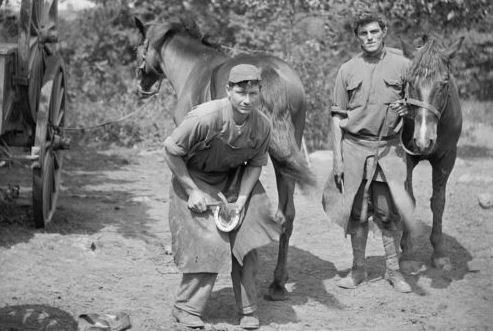
NOTE: Odie was my great Uncle Nick, Alma Nichols Odekirk. This letter was written to him by his Army buddy, Almon Bates, who passed away in 2005. This letter was so poetic, insightful and interesting, it needed to be shared. I hope it speaks to you as it has to me.
 Discover the Dash